A Sunday Reset That Starts with Clearing the Desk
Use a Sunday reset to clear one planning surface, give loose notes a home and prepare a useful first page without turning tidying into a project.
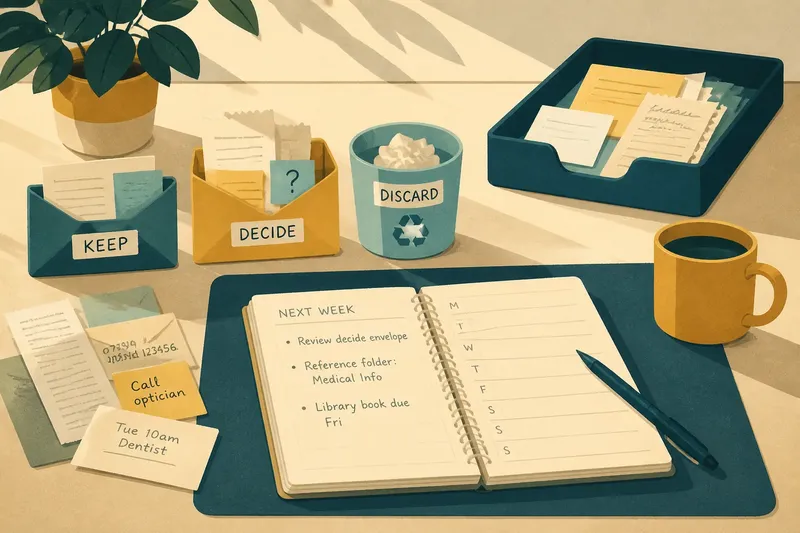
A shopping receipt, a folded appointment card and last week’s planner page are sharing the desk on Sunday evening. A Sunday reset can start with one small job: clear a single planning surface and gather the loose notes that keep getting buried.
The aim is not to tidy the whole room. It is to make the desk usable, decide what deserves attention and leave the next week’s first page ready for a quick glance.
Set a desk boundary
“Clear the desk” can easily expand into sorting drawers, moving furniture and reconsidering every household paper. Choose one surface instead: a desk pad, a corner of the kitchen table or a small tray beside your notebook.
Move only what is on that surface. Make three temporary landing places with an envelope, a folder and a recycling bin: keep for information you will need, decide for anything unclear, and discard for paper you no longer need.
That boundary works like a small doormat: it marks where the reset begins without claiming the whole house.
Give loose notes a home
Gather the scraps before sorting them: a phone number on an envelope, a reminder on a sticky note, a detail written beside a recipe. Read each one and decide whether it is still useful, unclear or ready to go.
For each useful note, choose a destination based on what it contains. Put information you need to consult in a reference folder or notebook; keep actionable details together in a dedicated notes pocket until you are ready to handle them; recycle the original only after you have transferred what matters.
If a note is hard to read or lacks context, put it in the decide envelope rather than guessing. Leave that envelope beside the planner so the unresolved question stays visible without taking over the page.
Keep sorting contained
A pile can raise questions that do not belong in a weekly reset: where every receipt should live, whether the desk needs rearranging, or how to reorganise stationery. Those projects may matter, but deciding them all now can bury the simple job of clearing the surface.
For each paper, choose only what it needs today: keep, transfer, file for later or discard. If it points to a bigger organising task, write that task on a separate list and put the paper away.
Imagine you find a library slip with a return date and a note about reorganising stationery. You copy the date onto the slip’s designated reminder spot in your notebook, place the slip in your outgoing-paper pocket, and write “revisit stationery” on a later list. The result is a visible prompt for the book and a deferred decision about the desk, not an unexpected drawer-clearing session.
Prepare a useful page
Open to the next week’s first page after gathering the notes. Add only confirmed details that will help you orient yourself: a short heading, a prompt to revisit the decide envelope, or a note that a particular reference folder contains information you may need.
Keep the page open for details that become clear later. It is a viewing surface, not a container for every scrap; write a pointer to a note’s home rather than copying its full contents when that is all you need.
What if Sunday slips?
What if Sunday feels too late?
Make the reset smaller rather than postponing it indefinitely: clear the one chosen surface, gather loose notes and leave the first page ready. If the evening is already full, put the gathered papers in their designated pocket and finish the remaining decisions at a calmer moment.
What if I miss Sunday?
Use the next moment you can spare, whether that is Monday morning or another day. The useful part is the sequence—clear one surface, gather notes and prepare the page—not the day named on the calendar.
Should every note go into the planner?
No. Keep reference details in their folder or notebook, and use the planner page for a brief pointer or prompt when that helps you find them in time.
What belongs on the first page?
Start with details you can confirm, such as a reminder to review the decide envelope or a note about where useful papers are kept. Leave unclear information in its holding place until you can interpret it.
Choose a notes landing place
Give incoming paper one dependable home: a shallow tray, a labelled folder or a single pocket in your notebook. Pick a place that is easy to reach from the planning surface, then return new scraps there instead of letting them spread across the desk.
- If the tray is easy to reach and keeps incoming notes together, keep using it; if papers still scatter, move it closer to where you open the planner.
- If the folder label clearly describes the papers inside, keep the label; if you hesitate before filing, rename it with a simpler description.
- If a notebook pocket holds the scraps you need for the next reset, retain it; if papers catch or spill out, switch to a folder or tray.
- If a note has a readable detail and a clear purpose, transfer that detail to its chosen home; if its meaning is unclear, put it in the decide envelope.
- If a paper contains information you no longer need, recycle it; if you cannot yet tell, keep it in the decide place until you can check.
- If the first page points you to what matters, leave it as it is; if it has become crowded with copied scraps, move the reference details back to their homes.
For a Sunday reset that starts with clearing the desk, the useful finish is not an immaculate room but a clear boundary: incoming notes have a home, unresolved papers are contained, and the first page tells you where to look next.